
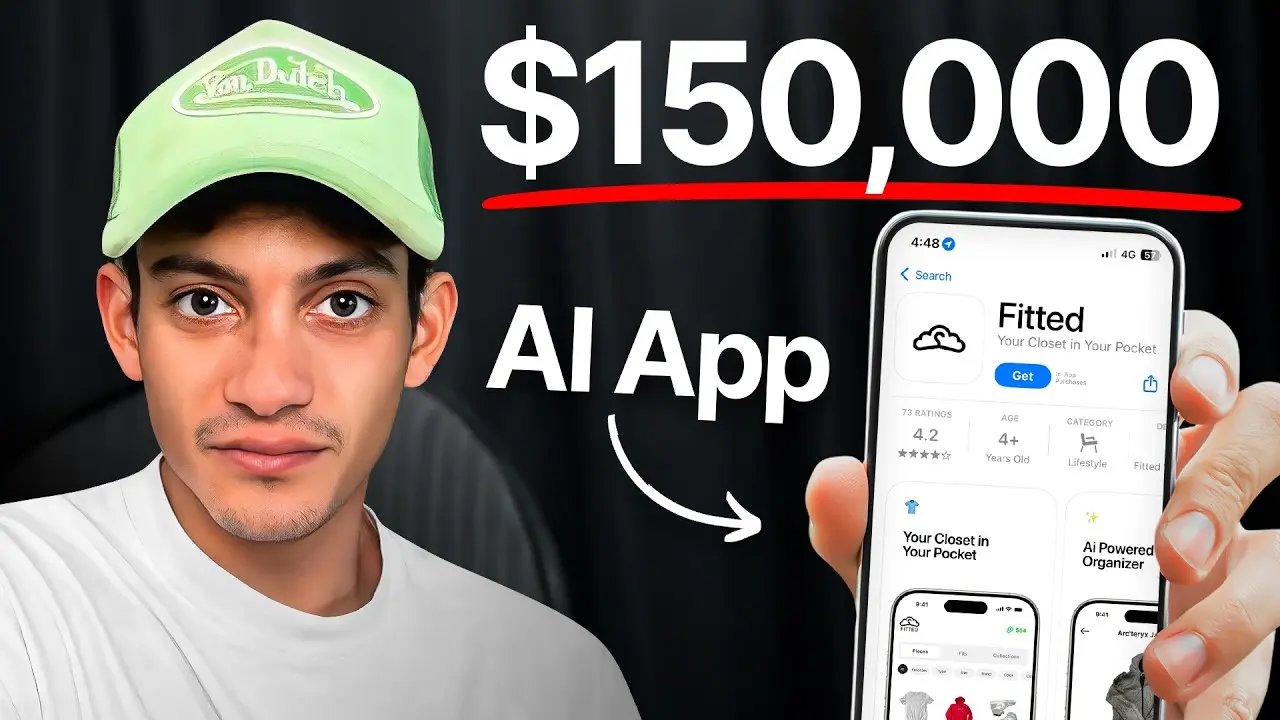

Reid has scaled a laundry service to 18 cities without owning a single washing machine, pivoted into AI-powered fashion, and cracked the code on influencer partnerships that actually work.In today's podcast interview recap, we'll break down his approach. He's refreshingly transparent about what drives viral growth versus what's just noise.
Our host, Joseph, covered a ton of ground with Reid. As always, if you haven't seen the interview yet, definitely check that out right here. For now, on to the recap:
The hustle that started everything
Reid's entrepreneurial journey didn't begin in a dorm room with a laptop. It started on a golf course.
He spent his early days as a caddy—grinding every day to earn a scholarship to Penn State. That wasn't just about making money. It was about building the kind of resilience that would define everything he'd do later.
Once he got to Penn State, Reid launched a laundry service from his dorm room. The twist? He scaled it to 18 cities without owning a single washing machine or van. It was pure operations—coordinating pickups, managing cleaners, and scaling infrastructure he didn't actually own.
Most people would've stayed in that lane. But Reid saw something bigger in the creator economy and the intersection of AI and fashion.
The pivot nobody saw coming
After the laundry business, Reid made a dramatic shift. He didn't iterate on logistics—he jumped into something completely different. Fashion. Specifically, an AI-powered app called Fitted that digitizes your closet, helps you style outfits, and taps into resale markets.
Here's the thing: Reid wasn't just chasing a trend. He identified a genuine gap in the market. Brands know what you buy, but nobody knows what's actually sitting in your closet. That closet data? It's worth hundreds of millions of dollars.
Fitted was born from that insight—a platform that captures personal closet data, uses AI to suggest outfits, and positions itself to revolutionize how people engage with fashion. But the real genius wasn't in the product itself. It was in how Reid built distribution before he even had a fully functional app.
How to get app downloads for 1-15 cents each
Most founders obsess over building the perfect product before anyone sees it. Reid flipped that entirely.
His formula? Start with really good organic videos on TikTok, then put just enough ad spend behind them to amplify reach. The result: Fitted drove downloads for an astonishing 1 to 15 cents each.
But here's where most people get it wrong: Reid didn't throw money at random creators or spam ads everywhere. He was surgical about it. He studied content creators who could reach his target audience—people who cared deeply about fashion and personal style. Then he tested with minimal risk.
The approach was simple: pay creators around $20 per video to test content. If the video resonated and started getting serious engagement, he'd double down. Once a formula worked, he'd invest more ad dollars behind the video to trigger viral momentum.
This isn't about luck. It's about iteration—experiment, measure, scale. Reid's team constantly hunted for new content formulas, tweaking messaging and visuals until something clicked. And once it did, they rode that wave hard.
The Max Gomez partnership that changed everything
If you're going to understand Fitted's growth, you have to understand Max Gomez.
Before Fitted, Max was making outfit videos in class. His content was fun, engaging, and—most importantly—a perfect match for what Reid envisioned. When Reid saw an opportunity, he didn't hesitate. He reached out on every platform possible—LinkedIn, Instagram, even guessing his email.
Initially, Reid structured the partnership as "crawl, walk, run." At first, Max was paid a modest $20 per video. This allowed the Fitted team to test the waters without sinking too many resources into an unproven channel. Even before any fully built product was released, Max's videos were pulling 20,000 to 30,000 views. That's traction you can't ignore.
When the engagement became undeniable and Max found himself with more bandwidth, the relationship evolved. He transitioned from being an external content creator to a co-founder with meaningful equity. This wasn't just influencer marketing—it was a fully integrated partnership.
Max didn't just make videos. He sat in on design meetings, provided critical community feedback, and became the bridge between Fitted and its target users. His audience lived in his comments, constantly expressing what they wanted, what was broken, what features mattered. That feedback looped directly into product development.
The genius move? Instead of treating Max like an outsider with a contract, Reid brought him in as an essential part of the team. This integration of influencer and product development is a paradigm shift in how companies approach marketing today.
From web app to mobile—the turning point
Early on, Fitted launched as a web app. While it performed reasonably well, it wasn't meeting expectations. The buzz was there, but the conversion wasn't.
Reid's audience was clearly more mobile-oriented, and the web experience wasn't resonating. So he made another pivot: a mobile app.
The decision came after a 15-minute call with Nikita Beer—a conversation that underscored the importance of understanding user behavior and expectations. The mobile version of Fitted took six grueling months of iterative development. Reid and his team worked closely with developers and even brought their early content collaborators together in Palm Springs to refuel creative engines and lock in a unified product vision.
When the mobile app finally launched, it was nothing short of explosive. On its first day, a video went mega viral, and downloads surged by hundreds of thousands "off the rip." The new mobile experience not only improved the conversion rate but also offered a more intuitive, engaging, and frictionless user journey.
Building an ecosystem around closet data
Reid isn't content with just a successful app. He envisions an entire ecosystem built around Fitted.
Today, the platform isn't merely about digitizing your wardrobe. It's evolving into an AI-driven fashion marketplace that taps into the incredible value of closet data. With over two million pieces uploaded onto Fitted, the app is amassing data worth hundreds of millions of dollars—data that could reshape how fashion is bought and sold.
Imagine a world where your closet data isn't just an inert record of your past purchases, but a powerful resource that fuels personalized recommendations, resale marketplaces, and even crypto integrations. That's Reid's vision.
Unique tools are in development to make cataloging your closet as effortless as possible—like one that scrapes online receipts or even a selfie-based upload feature. The goal is to remove every friction point between the user and building their digital closet.
Partnerships are a key element of this ecosystem. This summer, Fitted collaborated with Paramount to become the official virtual closet for the iconic movie Clueless—a nod to the film's legacy in shaping fashion narratives. Later, a strategic alliance with Poshmark allowed for a streamlined, one-click resale experience. And coming up, a partnership with TaskRabbit promises to help users digitize and catalog their closets by enlisting professional help.
Each of these collaborations not only enhances the user experience but also positions Fitted at the intersection of fashion, technology, and lifestyle.
The untapped potential of your closet
One of Reid's most compelling insights is that while major retailers know what you're purchasing, no one really knows what your closet holds. Fitted is uniquely positioned to unlock that value.
With all the pieces you upload, the app builds an enormous dataset—ranging from favorite brands and colors to style preferences and spending habits. Traditional players in the retail space, like Amazon or Shopify, lack this intimate level of data on what you actually wear on a daily basis.
This data isn't just a numbers game—it has the potential to feed powerful AI models that can predict trends, recommend outfit combinations, and even drive a new generation of resale markets. In essence, Fitted is reinventing fashion by giving consumers a platform where their personal style becomes an asset, while brands gain unprecedented insights into real, authentic consumer behavior.
The three-phase approach to influencer partnerships
What sets Fitted apart is not just its product but its innovative approach to influencer partnerships. Reid outlines a three-phase strategy that any entrepreneur looking to leverage influencer marketing can learn from:
Crawl: In the first phase, the partnership is initiated with minimal risk—a modest payment per video (around $20) is exchanged to test the content's impact. During this phase, the goal is to determine if the creator's audience aligns with the product's target market without requiring a heavy commitment on either side.
Walk: Once it becomes evident that the content resonates—marked by significant engagement and viral traction—the relationship evolves. The creator becomes more than a paid promoter; they start integrating deeper into the company's ecosystem. This is where the idea of tying revenue share or performance-based equity comes into play. For Reid, transitioning Max into a partner with real upside wasn't just a financial move—it was about building a community of stakeholders who were as passionate about the product as he was.
Run: In the final stage, the relationship matures into a full-fledged partnership. The influencer not only drives content creation but also becomes an integral part of product development, community engagement, and strategic planning. With this model, Fitted leverages the power of its most engaged voices to continuously refine the product and iterate on marketing strategies.
This "crawl, walk, run" method is a blueprint that can be applied to various industries, particularly those that thrive on creator-led communities. It underlines a fundamental shift in the way influencer marketing is perceived: not as a one-off deal for increased reach, but as a long-term, symbiotic relationship that drives both innovation and business success.
Relentless iteration and community feedback
Despite the viral success and impressive download numbers (over 600,000 downloads and 500 million views), Reid remains laser-focused on iterating the product. The mobile app, while a massive step forward, still faces challenges such as high churn and the need for increased stickiness.
Reid's relentless pursuit of product-market fit means that every feature is thoughtfully designed to add value and enhance user engagement. A significant part of this process is built into the company's culture. By having key figures like Max deeply embedded in the product's development, Fitted creates a feedback loop where customer insights directly influence the roadmap.
Whether it's tweaking the interface based on user comments or testing new features on TikTok before full-scale integration, Reid's approach is always iterative. He listens, he tests, and he refines—ensuring that every update is a step closer to building a platform that not only attracts users but keeps them coming back.
The grand vision—building a generational business
While many founders focus solely on immediate metrics such as downloads and subscription revenue, Reid's ambitions are far more expansive. His goal is not just to scale a startup but to build a generational business that could one day redefine the fashion industry.
This vision extends beyond the app itself, incorporating ideas like becoming an "AI resale marketplace" that leverages closet data to drive massive efficiencies and new revenue streams.
A key element of this grand vision is diversification. Reid is not content with relying solely on subscription revenue; he's exploring a host of other monetization avenues. One of the most intriguing is the integration of crypto into the ecosystem. Fitted's native token, Fitcoin, is already generating substantial daily trading volumes—around $4 million.
This token isn't just a gimmick; it's part of a broader strategy to align the interests of consumers, brands, and speculators. By creating an in-app economy that rewards users and incentivizes participation, Reid is quietly onboarding millions into the world of crypto and Web3 without them even realizing it.
The focus is clear: win market share rather than simply fighting over revenue numbers. Reid is shifting resources away from high-cost user acquisition toward making the product irresistibly engaging—a product where viral loops, community feedback, and strategic partnerships create an unstoppable flywheel of growth.
Strategic partnerships that expand the ecosystem
In any platform-driven economy, partnerships are a critical component of growth. Fitted's journey is studded with high-profile collaborations that aren't just gimmicks—they're strategic moves designed to enhance the product's overall ecosystem.
A standout example was the summer collaboration with Paramount, where Fitted became the official virtual closet of the cult classic movie Clueless. This partnership didn't just bring nostalgic appeal; it demonstrated how digital platforms can collaborate with well-known brands to create immersive experiences.
Shortly thereafter, Fitted announced a partnership with Poshmark. This integration enables users to seamlessly list their fashion items for resale with a single click, bridging the gap between digital wardrobe management and physical commerce.
And coming soon is an exciting collaboration with TaskRabbit, designed to tackle one of the biggest friction points for users: the labor-intensive process of scanning and cataloging clothing. Imagine being able to have professionals come to your door and digitize your entire closet—this is the sort of innovation Reid is pioneering.
Such partnerships collectively highlight a larger trend in digital innovation: the convergence of disparate industries—in this case, fashion, technology, and on-demand services—to create ecosystems that serve the modern consumer's needs.
Can this model work in other industries?
When asked whether the same model could be translated to other industries, Reid's answer is a resounding yes. His philosophy is that for every creator or influencer with a passionate following, there's potential for an entirely new app that caters specifically to their audience.
Whether it's travel, fitness, or even niche hobbies, the formula of combining creative content with a tailored digital product can be replicated across verticals.
There's even chatter about a potential "studio model" where companies build apps around specific creators. These platforms would allow influencers to mold the product's evolution, ensuring that it meets the unique needs of their audience. The secret, as Reid explains, lies in understanding that product-market fit is only half the battle—founder-market fit also plays a critical role.
When the people building the product are as passionate about it as those using it, the network effects can be explosive.
Practical advice for founders building with creators
If you're looking to replicate Reid's playbook, here's what you need to know:
Start small and test the market. Reid didn't wait for perfection. He launched a web app, tested content, refined the experience, and pivoted when needed. Don't wait to have everything figured out—launch, learn, and iterate.
Leverage the power of authentic content. Virality isn't about paying to be seen. It's about creating authentic, relatable content that resonates with the target audience. Reid's success on TikTok came from understanding trends, finding the right hooks, and fusing product education with entertainment.
Invest in the right partnerships. Don't settle for typical influencer marketing. Instead, build deep, symbiotic relationships with creators. Reid's "crawl, walk, run" approach with Max shows that when a partner is integrated into all facets of the business—from product development to marketing—the long-term payoff can be enormous.
Iterate relentlessly. Product-market fit is a journey. As Reid's experience shows, once the initial traction was captured, it was vital to invest in the mobile experience and continually refine the product in response to user feedback.
Think beyond conventional models. Innovation often lies at the intersection of industries. Whether it's integrating cryptocurrency into a fashion app or merging on-demand services with digital wardrobe management, the key is to recognize how disparate ideas can come together to create something truly disruptive.
Focus on winning market share, not just revenue. Reid's current strategy involves making Fitted entirely free to use, removing paywalls that hinder growth. He's prioritizing stickiness and engagement over immediate monetization, understanding that a massive, engaged user base is the foundation for long-term success.
Wrapping up
Reid's success isn't about one viral video or one clever partnership. It's about understanding the fundamentals of distribution-first product development, building authentic relationships with creators who become true partners, and relentlessly iterating based on real user feedback.
The tactics might change—what works on TikTok today might not work tomorrow—but the fundamentals stay the same: start small, test aggressively, integrate your community into product development, and never lose sight of the long-term vision.
As Reid gears up for the next phase—refining the product, expanding partnerships, and integrating crypto into the mix—the story of Fitted serves as a blueprint for modern tech entrepreneurs. It illustrates that virality isn't a lucky accident; it's the result of calculated experimentation, seamless collaboration with creators, and an unwavering commitment to meeting market demand head-on.
As always, if you're ready to test your paywall, run price tests and more for your app, then you're already in the right spot. Sign up for a free Superwall account today!